What Nashville Businesses Should Know Before Scheduling Flooring Removal
Flooring removal is rarely as straightforward as it appears on the surface. For Nashville businesses planning a renovation, facility upgrade, or full flooring replacement, understanding what the process actually involves can mean the difference between a smooth project and a costly, time-consuming setback. Before scheduling work, there are several important factors every business owner and facilities manager should consider.
Surface Preparation Is the Foundation of Every Successful Flooring Project
One of the most common misconceptions in commercial flooring is that removal is simply a precursor to the real work. In reality, proper surface preparation is among the most critical phases of any flooring installation. When existing materials are removed incorrectly or incompletely, the substrate beneath can be left uneven, contaminated with adhesive residue, or structurally compromised. Any new coating or flooring system applied over a poorly prepared surface is unlikely to perform as intended, regardless of material quality.
Whether the goal is a new epoxy system, polished concrete, or a decorative coating, the concrete substrate must be clean, flat, and properly profiled before any new product goes down. This is why working with experienced commercial flooring contractors in Nashville from the start matters so much.
Know What You Are Removing Before Work Begins
Not all flooring materials are created equal, and the removal process varies significantly depending on what is currently installed. VCT tile, for example, is a common flooring material found in commercial and institutional buildings throughout Nashville. VCT tile removal in Nashville requires specific equipment and techniques to remove the tile and the adhesive beneath it without damaging the concrete slab.
Other materials such as carpet, ceramic tile, hardwood, and existing coatings each present their own removal challenges. Identifying what is in place and understanding the condition of the substrate below it allows a qualified contractor to plan accordingly, allocate the right equipment, and provide an accurate project timeline.
Operational Disruption Is a Real Consideration
For businesses that cannot afford extended downtime, scheduling and sequencing flooring removal requires careful planning. A qualified contractor should be able to work with your operational schedule, whether that means phased removal across sections of a facility, after-hours work, or weekend scheduling. Before signing any contract, businesses should discuss their operational constraints openly and confirm that the contractor has experience managing projects within active or semi-active facilities.
The Scope of the Project Affects Everything
Project scale directly influences equipment selection, crew size, timeline, and cost. A small retail space and a warehouse spanning hundreds of thousands of square feet require entirely different approaches. Working with a contractor who has genuine experience across a range of project sizes ensures that your specific scope will be handled with the appropriate resources rather than adapted from a one-size-fits-all approach.
What Comes Next Shapes How Removal Should Be Done
The intended final flooring system should inform how removal is performed. If the plan is to install an epoxy coating, the surface will need to be mechanically prepared to a specific profile to ensure proper adhesion. If the goal is concrete polishing in Nashville or concrete staining in Nashville, the removal process must protect the integrity of the slab since the concrete itself becomes the finished floor. Communicating the full scope of your project to your contractor before removal begins prevents unnecessary rework and keeps the project on schedule.
Choosing the Right Contractor for Flooring Removal in Nashville
Experience and technical competence are non-negotiable when it comes to flooring removal in Nashville. A contractor with a long track record in the region will understand local building conditions, common substrate issues, and the demands of working within an active commercial environment. Specialty Coatings has been serving Nashville and the broader Southeast since 1995, handling projects ranging from residential garages to large-scale industrial facilities across Tennessee, Chattanooga, Memphis, Louisville, and Birmingham.
Choosing a contractor who offers both removal and installation services also simplifies accountability. When one team handles the entire process, there is no ambiguity about responsibility if issues arise during or after installation.
Ready to Plan Your Flooring Project?
If your Nashville business is preparing for a flooring removal or replacement project, Specialty Coatings is ready to help you plan it the right way. Contact our team today to discuss your project scope, timeline, and flooring goals.
Request a consultation with Specialty Coatings
Why Surface Preparation Makes or Breaks Your Epoxy Flooring Installation
When a new epoxy floor fails prematurely, the cause is rarely the coating itself. More often than not, the problem traces back to what happened before a single drop of epoxy was applied. Surface preparation is the foundation of every successful flooring installation, and skipping or rushing this phase is one of the most costly mistakes a facility owner can make.
The Science Behind Surface Preparation
Epoxy coatings bond to concrete through a mechanical and chemical adhesion process. For that bond to hold under the demands of daily foot traffic, heavy equipment, chemical exposure, or temperature fluctuations, the concrete substrate must be clean, structurally sound, and properly profiled. Contamination from oils, curing compounds, old adhesives, or moisture can prevent epoxy from bonding correctly, leading to delamination, bubbling, or peeling that compromises the entire floor system.
Concrete that has not been properly abraded also lacks the surface profile needed for the coating to grip. A smooth, untreated slab may look ready to coat, but on a microscopic level, it offers very little for the epoxy to anchor to. The result is a floor that looks fine initially but begins to fail under normal use conditions.
Common Surface Preparation Methods
Professional commercial flooring contractors in Nashville rely on several proven methods to prepare concrete before coating. Shot blasting is widely used in industrial settings because it simultaneously cleans the surface and creates a consistent profile across large areas. Diamond grinding is another effective technique, particularly useful for smoothing high spots or addressing surface irregularities before application.
In facilities where old flooring systems need to be removed first, proper flooring removal in Nashville is a critical preliminary step. Legacy materials such as VCT tile can leave behind adhesive residue that must be fully eliminated before any new coating system is installed. Attempting to coat over these remnants leads to bond failure and ultimately costs far more in repairs than the removal work would have in the first place.
Moisture Testing and Crack Repair
Two additional factors that experienced contractors always assess before coating are moisture vapor transmission and structural integrity. Concrete is a porous material, and moisture migrating up through the slab can break the bond between the coating and the substrate. Professional installers test for moisture levels and select appropriate primer systems or vapor barriers when elevated readings are detected.
Cracks and spalls in the concrete also require attention before coating begins. While epoxy can bridge minor surface imperfections, it is not a structural repair product. Filling and stabilizing cracks beforehand ensures that the finished floor performs as intended and maintains its appearance over time.
Why Experience Matters in Preparation Work
Surface preparation is as much a skilled trade as the coating application itself. Knowing which preparation method is appropriate for a given substrate condition, how aggressively to profile the surface, and how to address problem areas without damaging the concrete requires hands-on experience and sound judgment. This is not work that benefits from guesswork.
Specialty Coatings has been operating as an epoxy flooring contractor in Nashville since 1995, with decades of experience across a wide range of project types and scales. From residential garage floors to commercial and industrial facilities spanning several hundred thousand square feet, the team has developed the expertise to assess substrate conditions accurately and execute preparation work that sets every installation up for long-term success. Serving clients throughout Tennessee and the broader Southeast, including Chattanooga, Memphis, Louisville, and Birmingham, Specialty Coatings brings regional knowledge and proven processes to every project.
Their service capabilities extend beyond epoxy installations to include concrete polishing in Nashville, VCT tile removal in Nashville, and other surface preparation and finishing services that give clients a single, accountable partner for the entire flooring process.
The Long-Term Cost of Cutting Corners
A floor that fails within a few years of installation is not just a visual problem. It creates safety hazards, disrupts operations, and requires costly remediation work that often exceeds the original project budget. Investing in thorough surface preparation from the outset is the most reliable way to protect that investment and ensure the floor performs as expected throughout its service life.
Ready to Start Your Flooring Project?
If you are planning an epoxy flooring installation and want to ensure it is done right the first time, the team at Specialty Coatings is ready to help. With over 30 years of experience serving commercial, industrial, and residential clients across Tennessee and the Southeast, we have the knowledge and resources to deliver results that last. Contact us today to discuss your project and schedule a consultation.
Can Existing Concrete Flooring Be Polished? What to Know About Cracks, Spalling, and Repairs
Concrete flooring has become a popular choice for commercial, industrial, and even retail environments because of its durability, low maintenance requirements, and modern appearance. Many property owners assume polished concrete is only possible with a newly poured slab, but in reality, existing concrete can often be transformed into an attractive polished surface.
However, the condition of the slab plays a major role in determining the final result. Cracks, spalling, surface imperfections, and previous coatings must all be evaluated before the polishing process begins. Understanding how these issues affect the floor can help property owners make informed decisions and set realistic expectations when it comes to concrete polishing in Nashville.
Can Existing Concrete Flooring Be Polished?
In many cases, existing concrete floors are excellent candidates for polishing. Concrete polishing involves mechanically grinding, refining, and polishing the surface using industrial diamond tooling. The process creates a durable floor that resists dust, abrasion, and staining while producing a clean, professional appearance.
Older concrete slabs are frequently polished in warehouses, manufacturing facilities, retail stores, office buildings, and other commercial settings. The age of the slab is often less important than its overall condition. A floor that has been properly maintained and remains structurally sound can typically be restored through grinding, resurfacing, and polishing.
Before polishing begins, contractors perform a thorough assessment to determine whether repairs are necessary. This evaluation helps identify any defects that could impact the appearance or performance of the finished floor.
Understanding Cracks Before Concrete Polishing in Nashville
One of the most common concerns with existing concrete is cracking. Nearly all concrete develops some degree of cracking over time due to shrinkage, settling, temperature fluctuations, or structural movement.
The good news is that many cracks do not prevent a floor from being polished. Hairline cracks and minor surface imperfections can often be filled and blended during the preparation phase. In fact, crack repair is a standard part of many polishing projects. Industry best practices often include patching cracks, pinholes, and surface voids before the polishing process continues.
However, not all cracks are cosmetic. Structural cracks, active movement joints, or cracks caused by foundation issues may require additional repairs before polishing can begin. If these underlying problems are ignored, they can continue to worsen and affect the finished floor.
For property owners considering concrete polishing in Nashville, a professional inspection is the best way to determine whether cracks require simple filling or more extensive restoration.
What Is Concrete Spalling?
Spalling occurs when the surface layer of concrete begins to flake, chip, or break away. This issue can result from moisture intrusion, freeze-thaw cycles, impact damage, heavy traffic, poor installation practices, or years of wear.
Spalling is especially common in industrial facilities where forklifts, heavy machinery, and constant traffic place significant stress on the floor. The damage can range from small surface pits to larger areas where chunks of concrete have detached.
Although spalling may look severe, it does not automatically mean the slab must be replaced. Many floors can be restored through resurfacing and repair techniques that rebuild damaged areas before polishing.
The extent of the damage will determine the appropriate repair strategy, but replacement is often considered only when structural integrity has been significantly compromised.
How Repairs Affect the Final Appearance
One question property owners frequently ask is whether repaired areas will disappear completely after polishing.
The answer depends on the severity of the damage and the repair materials used. While modern repair techniques can create a seamless and professional appearance, some repaired cracks or patches may remain slightly visible. This is especially true in decorative polished concrete applications where the natural character of the slab is preserved.
Many facility owners actually appreciate this appearance. Similar to natural stone, polished concrete often includes subtle variations, aggregate exposure, and repaired imperfections that contribute to its unique look.
The goal of repair work is not necessarily to make every defect invisible. Instead, it is to restore structural integrity, improve performance, and create a floor that is both attractive and durable.
The Importance of Surface Preparation
The success of any polished concrete project depends heavily on surface preparation. Before polishing begins, contractors typically remove old coatings, adhesives, contaminants, and damaged material from the slab. Grinding and profiling equipment help create a smooth, stable surface ready for polishing.
Proper preparation serves several important purposes. It exposes hidden defects that may require repair, improves floor flatness, and ensures the polishing process produces consistent results. It also allows contractors to determine the level of aggregate exposure and sheen that can realistically be achieved.
Without thorough preparation, even a high-quality polishing system may fail to deliver the desired appearance or longevity.
When a Floor May Not Be a Good Candidate
Although many existing slabs can be polished successfully, some floors require more extensive restoration before polishing becomes feasible.
Concrete with widespread structural damage, severe moisture problems, extensive delamination, or significant surface deterioration may need resurfacing or overlay systems. In extreme cases, partial replacement may be necessary.
Fortunately, these situations are less common than many property owners expect. Most aging concrete floors can be repaired, resurfaced, and transformed into durable polished surfaces with the right preparation and expertise.
The key is identifying potential issues early and addressing them before they impact the finished floor.
Why Concrete Polishing in Nashville Continues to Grow
Businesses throughout Middle Tennessee continue to choose polished concrete because it offers a combination of durability, aesthetics, and low maintenance. Unlike many flooring systems, polished concrete utilizes the existing slab, reducing the need for additional flooring materials.
Properly polished concrete can withstand heavy traffic, resist abrasion, improve light reflectivity, and provide years of service with relatively simple maintenance. These advantages make it an attractive option for warehouses, manufacturing facilities, retail stores, offices, and commercial buildings.
Even older floors with cracks or minor spalling can often be restored to a professional finish through careful preparation and repair.
Working With Specialty Coatings
If you’re considering concrete polishing in Nashville, it is important to work with a contractor experienced in evaluating existing slabs and addressing issues such as cracking, spalling, and surface deterioration before polishing begins.
Specialty Coatings has provided commercial and industrial concrete flooring solutions throughout the Southeast for more than 25 years. Our services include concrete preparation, resurfacing, polishing, staining, and restoration for demanding environments.
Whether your floor has minor imperfections or requires more extensive repairs, an experienced evaluation can help determine the best path forward. Contact Specialty Coatings to learn how your existing concrete floor may be transformed into a durable, polished surface that enhances both appearance and performance.
Concrete Stain Colors and Finishes: How to Pick the Right Look for Your Space
Selecting the right colors and finishes for concrete staining in Nashville can transform an ordinary surface into a stunning focal point that enhances your entire space. Whether you’re working on a residential garage, commercial showroom, or industrial facility, understanding your options and making informed decisions about staining will ensure long-lasting results that meet both aesthetic and functional requirements.
Understanding Concrete Stain Types
The foundation of any successful concrete staining project begins with understanding the fundamental differences between stain types. Acid-based stains create rich, variegated colors through chemical reactions with minerals in the concrete, producing unique patterns that cannot be replicated. These stains penetrate deeply into the concrete surface, creating permanent color that won’t chip or peel over time.
Water-based stains offer broader color options and more predictable results. These products provide consistent coverage and allow for greater control over the final appearance. Water-based stains work well in spaces where uniform color distribution is preferred, making them particularly suitable for commercial applications where consistency across large areas is essential.
Color Selection Considerations
The color selection process requires careful consideration of your space’s intended use, lighting conditions, and existing design elements. Darker stain colors like deep browns, charcoals, and blacks create dramatic effects while effectively hiding minor imperfections and daily wear. These colors work exceptionally well in industrial settings and modern commercial spaces where sophisticated aesthetics are desired.
Lighter colors such as tans, beiges, and soft grays brighten spaces and create an open, welcoming atmosphere. These selections are particularly effective in residential applications and retail environments where creating an inviting ambiance is important. Earth tones provide versatility and complement a wide range of architectural styles and interior design schemes.
Finish Options and Their Applications
The finish applied over your stained concrete significantly impacts both appearance and performance. Matte finishes offer a natural, understated look that works well in residential settings and spaces where glare reduction is important. These finishes provide adequate protection while maintaining a subtle appearance that doesn’t compete with other design elements.
Satin finishes strike a balance between protection and aesthetics, offering moderate sheen that enhances color depth while providing good durability. This option works well in commercial spaces that experience moderate traffic and require easy maintenance.
High-gloss finishes maximize color vibrancy and provide the highest level of protection against wear, chemicals, and moisture. These finishes are ideal for showrooms, retail spaces, and industrial facilities where both appearance and performance are critical factors.
Environmental and Functional Factors
Your space’s environmental conditions and functional requirements play crucial roles in stain and finish selection. Areas exposed to heavy traffic, chemical exposure, or moisture require stains and protective coatings that can withstand these challenges. Industrial facilities and commercial kitchens benefit from darker colors and high-performance finishes that maintain their appearance despite demanding conditions.
Temperature fluctuations and UV exposure can affect stain performance over time. Spaces with significant natural light exposure may require UV-resistant topcoats to prevent color fading, while areas subject to temperature variations need finishes that can expand and contract without compromising adhesion.
Professional Installation Considerations
Proper surface preparation forms the foundation of any successful concrete staining project. The concrete surface must be thoroughly cleaned, any existing coatings removed, and surface defects addressed before stain application. Inadequate preparation can result in uneven color absorption, poor adhesion, and premature failure.
The application process requires specific environmental conditions and timing to achieve optimal results. Temperature, humidity, and ventilation all influence stain penetration and finish curing. Professional contractors understand these variables and adjust their techniques accordingly to ensure consistent, high-quality outcomes.
Making Your Final Decision
Selecting the right concrete stain colors and finishes requires balancing aesthetic preferences with practical considerations. Consider requesting sample applications on inconspicuous areas to evaluate how different options appear under your specific lighting conditions and with your existing design elements.
The investment in quality materials and professional installation pays dividends in long-term performance and appearance retention. Concrete staining in Nashville and throughout the Southeast requires expertise in local conditions and proven application techniques to achieve lasting results.
Ready to Transform Your Concrete Surfaces?
Specialty Coatings brings over 20 years of experience to concrete staining projects throughout Tennessee and the Southeast. Our team has successfully completed projects ranging from residential garages to large commercial installations, consistently delivering results that exceed expectations. Contact us today to discuss your concrete staining project and discover how the right colors and finishes can enhance your space.
Top Commercial Flooring Options for Nashville Businesses: VCT, LVP, Epoxy, Polished Concrete
Whether you operate a retail shop, restaurant, warehouse, or office, understanding the strengths of different flooring materials can help you make a more informed investment.
This guide explores four of the most popular commercial flooring options—VCT, LVP, epoxy, and polished concrete—and how they meet the needs of local businesses. Working with experienced commercial flooring contractors in Nashville ensures that your flooring performs as expected and aligns with your operational goals.
VCT Flooring
Vinyl Composition Tile, commonly known as VCT, has long been a staple in commercial spaces. It is particularly popular in schools, hospitals, and large retail environments due to its affordability and resilience.
VCT flooring is known for its ability to withstand heavy foot traffic while remaining relatively easy to replace in sections if damage occurs. Its modular design allows for creative patterns and color combinations, giving businesses flexibility in design. However, it does require regular maintenance, including stripping and waxing, to maintain its appearance.
For businesses seeking a budget-friendly solution with proven durability, VCT remains a dependable option. Experienced commercial flooring contractors in Nashville can ensure proper installation and maintenance planning to maximize its lifespan.
LVP Flooring
Luxury Vinyl Plank, or LVP, has grown in popularity thanks to its ability to mimic natural materials like hardwood while offering superior durability. It is especially appealing for offices, retail spaces, and hospitality environments where aesthetics matter.
LVP is resistant to moisture, scratches, and dents, making it ideal for high-traffic areas. It also provides a more comfortable underfoot feel compared to harder surfaces, which can be beneficial in spaces where employees or customers stand for extended periods.
Another advantage of LVP is its relatively low maintenance requirements. Routine cleaning is typically sufficient to keep it looking new. When installed by knowledgeable commercial flooring contractors in Nashville, LVP can deliver both visual impact and long-term performance.
Epoxy Flooring
Epoxy flooring is a top choice for industrial and commercial environments that demand durability and chemical resistance. Commonly found in warehouses, manufacturing facilities, and garages, epoxy creates a seamless, non-porous surface that can withstand heavy machinery and spills.
One of the standout features of epoxy flooring is its customization potential. It can be tinted in various colors, incorporate decorative flakes, or even include safety markings. This makes it not only functional but also adaptable to branding and safety needs.
Epoxy floors are also easy to clean and maintain, which is a significant advantage in environments where hygiene and efficiency are critical. Proper surface preparation is essential for epoxy installation, which is why partnering with experienced commercial flooring contractors in Nashville is key to achieving a durable and long-lasting finish.
Polished Concrete
Polished concrete has become increasingly popular in Nashville’s commercial spaces, especially in modern retail stores, offices, and restaurants. Its sleek, industrial look aligns well with contemporary design trends while offering exceptional durability.
This flooring option involves grinding and polishing the existing concrete slab to achieve a smooth, reflective surface. The result is a floor that is not only visually striking but also highly resistant to wear and tear.
Polished concrete requires minimal maintenance compared to other flooring types. It does not need waxing or coatings, and it resists stains when properly sealed. Additionally, it can improve lighting efficiency by reflecting ambient light, which may help reduce energy costs.
For businesses looking for a long-term solution with minimal upkeep, polished concrete is an excellent investment when installed by skilled professionals.
Choosing the Right Flooring for Your Business
Selecting the right flooring ultimately comes down to understanding your business’s unique needs. High-traffic retail environments may benefit from the durability of VCT or epoxy, while offices and hospitality spaces may lean toward the aesthetic appeal of LVP or polished concrete.
Climate is another important consideration in Nashville. Humidity and temperature fluctuations can impact certain materials, making professional guidance essential. By working with experienced contractors, you can ensure that your flooring is properly installed and suited to local conditions.
Budget, maintenance expectations, and brand image should also factor into your decision. A well-chosen floor not only enhances the appearance of your space but also contributes to operational efficiency and customer experience.
A Professional Approach with Specialty Coatings
When it comes to installing and maintaining commercial flooring, working with a knowledgeable and experienced team makes all the difference. Specialty Coatings offers a range of solutions tailored to the needs of Nashville businesses, including epoxy coatings and polished concrete systems.
Our expertise in surface preparation, installation techniques, and long-term performance ensures that your flooring investment delivers lasting value. Whether you are upgrading an existing space or building from the ground up, partnering with professionals can help you achieve a result that is both functional and visually impactful.
If you are considering new flooring for your business, reach out to Specialty Coatings to discuss your options and explore solutions designed to meet your specific needs.
How Do You Choose the Right Commercial Flooring Contractors in Nashville?
Selecting the right contractor for your commercial flooring project is a critical decision that impacts not only the appearance of your space but also its durability, safety, and long-term maintenance costs.
Understanding what to look for in commercial flooring contractors in Nashville can help ensure your investment delivers lasting value.
Why Choosing the Right Commercial Flooring Contractor Matters
Commercial flooring is fundamentally different from residential flooring. It must withstand heavy foot traffic, equipment use, and strict safety requirements. A poorly installed floor can lead to premature wear, costly repairs, and even liability concerns.
Working with experienced commercial flooring contractors in Nashville ensures that the materials, installation methods, and finishes are tailored to your specific industry. Whether you operate a warehouse, healthcare facility, retail space, or office, the right contractor will understand how to balance aesthetics with performance.
Evaluate Experience and Industry Expertise
One of the first factors to consider is the contractor’s experience in commercial environments. Not all flooring companies specialize in large-scale or high-performance applications.
Contractors with a strong commercial background typically have experience with specialized coatings, polished concrete, epoxy systems, and other industrial-grade solutions. They understand how to prepare surfaces properly, manage moisture issues, and apply coatings that meet safety and compliance standards.
When researching commercial flooring contractors in Nashville, look for a portfolio that demonstrates work across multiple industries. This versatility is often a sign of technical expertise and adaptability.
Assess Material Knowledge and Recommendations
The best contractors guide you in choosing the right materials for your space. Different environments require different solutions.
For example, a manufacturing facility may require durable, chemical-resistant coatings, while a retail space may prioritize aesthetics and ease of maintenance. A knowledgeable contractor will assess your needs and recommend flooring systems that align with your operational demands.
They should also explain the benefits of each option, including longevity, maintenance requirements, and cost considerations. This level of transparency helps you make informed decisions and avoid unexpected issues down the line.
Review Licensing, Insurance, and Certifications
Professional credentials are essential when selecting a contractor. Proper licensing and insurance protect both your business and the contractor during the project.
Reputable commercial flooring contractors in Nashville will carry general liability insurance and workers’ compensation coverage. They may also hold certifications from manufacturers or industry organizations, which indicate specialized training in specific flooring systems.
Verifying these credentials upfront helps ensure that the contractor meets industry standards and operates with professionalism.
Understand the Installation Process
A successful flooring project requires a well-executed installation process. Contractors should be able to clearly outline each phase of the project, from surface preparation to final coating and curing.
Surface preparation is especially important in commercial settings. Without proper cleaning, leveling, and repair, even the highest-quality flooring systems can fail prematurely.
Experienced contractors will also discuss timelines, potential disruptions, and how they plan to minimize downtime for your business. This level of planning is essential for maintaining operations during installation.
Evaluate Communication and Project Management
Clear communication is a hallmark of a reliable contractor. From the initial consultation to project completion, you should feel confident that your questions are being addressed and your expectations are understood.
Strong project management ensures that timelines are met, materials are delivered on schedule, and any issues are resolved quickly. Contractors who prioritize communication are more likely to deliver a smooth and stress-free experience.
When speaking with commercial flooring contractors in Nashville, pay attention to how responsive and thorough they are. This can be a strong indicator of how they will handle your project.
Check References and Past Client Feedback
One of the most effective ways to evaluate a contractor is by reviewing their past work and client feedback. Testimonials, case studies, and references can provide valuable insight into the contractor’s reliability and quality of work.
Look for consistent themes in reviews, such as professionalism, attention to detail, and adherence to timelines. If possible, ask to see completed projects or speak directly with past clients.
This step helps confirm that the contractor has a proven track record of delivering successful commercial flooring projects.
Partnering with Specialty Coatings for Commercial Flooring
From advanced coating systems to tailored installation processes, Specialty Coatings works closely with clients to deliver results that meet both functional and aesthetic goals. Our commitment to quality and customer satisfaction makes us a strong choice for businesses seeking reliable flooring solutions.
If you are exploring options for commercial flooring contractors in Nashville, consider reaching out to us at Specialty Coatings to discuss your project.
A Guide to Flooring Removal: Methods, Dust Control, and Timelines
Whether you’re renovating a facility, updating outdated flooring, or preparing for a new surface installation, proper Nashville flooring removal is a critical first step.
Here are some common removal methods, dust control strategies, and realistic timelines to help you plan effectively and minimize disruptions to your project schedule.
Understanding Nashville Flooring Removal: Why It Matters
Before installing new flooring, existing materials often need to be completely removed. This isn’t just about tearing up the old surface — it’s about ensuring the substrate (the surface beneath the flooring) is clean, smooth, and structurally sound for whatever comes next. Ineffective removal can lead to adhesion problems, uneven surfaces, and premature failures of the new floor.
In commercial and industrial settings specifically, Nashville flooring removal isn’t just a cosmetic task. It’s an engineered process that has to consider material types, subfloor conditions, and future use.
Common Flooring Removal Methods
Different flooring materials require different removal techniques. Choosing the right one impacts both efficiency and the quality of preparation for new flooring.
1. Mechanical Scraping
Mechanical scraping uses powered tools that lift and pry up floor coverings such as vinyl, carpet, and tile. For resilient floors like VCT (Vinyl Composition Tile) or sheet vinyl, this method is often effective when combined with specialized blades or blades with aggressive teeth. Its efficiencies make it common in many Nashville flooring removal projects.
2. Shot Blasting and Grinding
Shot blasting and grinding are advanced methods for heavier-duty flooring or coatings. Shot blasting propels small steel shot against the surface, removing coatings and leveling the concrete. It’s especially useful for preparing concrete substrates and can be relatively dust-free compared to other methods. Grinding, often done with diamond-embedded disks, smooths imperfections and achieves a flat profile prior to coating or leveling products being applied.
3. Heat and Chemical Softening
Some stubborn adhesives or resilient materials may require heat guns or chemical solvents to soften them for easier removal. While effective, these methods must be used with care, as some chemical products can pose safety and ventilation concerns.
Addressing Dust Control During Removal
Dust is one of the biggest challenges during flooring removal, especially in commercial or occupied spaces. It’s more than a cleanliness issue; airborne dust can pose health risks, damage equipment, and migrate into other areas of a facility.
Enclosed Area Preparation
Before starting, isolate the work area using plastic barriers or temporary walls to prevent dust migration throughout occupied spaces. Seal HVAC vents in the removal zone and use negative-pressure machines to direct dust out of the work area.
Vacuum-equipped Tools
Modern Nashville flooring removal equipment often comes with built-in vacuum ports. Connecting industrial vacuums to grinders or shot blasters captures a significant portion of airborne dust at the source. HEPA-rated vacuums are especially effective for fine dust particles.
Water Control Methods
In some cases, applying water mist during cutting or grinding can suppress dust. However, this requires careful management to avoid creating slips or water damage, and may not be suitable for all flooring types.
Clean-Up Protocols
Frequent cleanup during and after removal helps keep dust levels down. Wet wiping surfaces and using HEPA vacuums for final cleanup improve safety and air quality.
Realistic Timelines for Flooring Removal Projects
The time required for Nashville flooring removal varies widely depending on several factors:
Type of Flooring Being Removed
- Sheet Vinyl and Carpet: Often faster to remove because they come up in large sections, especially if adhesives have weakened over time.
- Tile and Masonry Flooring: Takes longer due to the need for chiseling, breaking tiles, and removing mortar beds.
- Epoxy or Coated Surfaces: Requires grinders or shot blasting to effectively remove bonding agents and coatings.
Square Footage and Space Layout
Removal of 500 square feet in a straightforward space with few obstacles might take a full day. Larger areas, angled walls, or equipment placements can extend this significantly.
Subfloor Condition
If the substrate is uneven, damaged, or has extensive adhesive residue, additional preparation time is needed before new flooring can be installed.
Project Logistics and Access
Work hours, off-hour restrictions (such as in commercial facilities), and the need for dust containment can all impact timelines. Projects scheduled outside peak hours or in phases may last longer but minimize disruption to daily operations.
Preparing for New Flooring
Effective removal sets the stage for whatever new flooring you plan next — whether it’s epoxy coatings, polished concrete, new tile, or resilient flooring products.
After removal, the subfloor often needs additional work such as:
- Shot blasting or diamond grinding
- Adhesive residue sanding
- Moisture testing
- Leveling or patching
Skimping on these steps can compromise new flooring performance and shorten its service life.
About Specialty Coatings and How We Can Help
When your project demands experienced professionals with the right equipment and expertise, Specialty Coatings offers comprehensive flooring removal and surface preparation services in the Nashville area. With over 25 years of experience handling everything from VCT tile and carpet to epoxy coatings, our team can manage even large-scale removals with efficiency and safety.
Whether you’re preparing for a new commercial flooring system or need thorough surface prep for coatings like epoxy or polished concrete, we provide tailored solutions that keep your project on schedule and help ensure the long-term performance of your investment.
Ready to get started? Contact us at Specialty Coatings today to discuss your flooring removal needs and request a professional quote.
Protect Commercial Concrete Floors with Epoxy Coatings
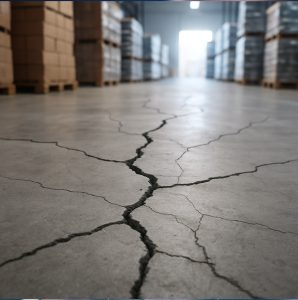
Concrete floors are the backbone of industrial and commercial facilities. They need to be effective, economical, and safe to maintain. Yet over time, cracks form—compromising safety and driving up costs for repairs and downtime. However, you can protect commercial concrete floors with epoxy coatings. These coatings strengthen and protect concrete, extend service life, and reduce the risk of costly damage.
Why Concrete Floors Crack
Industrial floors face daily punishment. Common culprits behind cracks include:
- Heavy machinery: Forklifts, trucks, and other equipment place enormous stress on surfaces.
- Constant traffic: Repeated foot and vehicle movement steadily wears down concrete.
- Environmental stress: Moisture, chemicals, and temperature fluctuations accelerate deterioration.
If ignored, cracks quickly worsen, creating safety risks, higher maintenance costs, and operational disruptions.
How Epoxy Coatings Protect Commercial Concrete Floors
Epoxy finishes provide both protection and visual appeal. Applied as a durable layer over concrete, they reinforce the surface and stop new cracks from forming. Benefits include:
- Surface reinforcement: Epoxy bonds tightly with concrete, absorbing the impact of heavy loads and traffic.
- Moisture and chemical resistance: Protective properties guard against spills, corrosion, and environmental wear.
- Reduced maintenance: Long-lasting performance cuts down on costly repairs and downtime.
The result? Stronger, safer, and more durable floors that perform under pressure.
Ideal Applications for Epoxy
Epoxy coatings excel in high-traffic, high-stress environments. They are particularly suited for:
- Warehouses
- Manufacturing plants
- Loading docks
By distributing loads evenly and resisting wear, epoxy coatings dramatically reduce cracking risks in these demanding spaces.
Protect Your Floors with Specialty Coatings
Delaying concrete floor maintenance only raises costs and risks. Adding epoxy coatings to your maintenance program safeguards floors, enhances safety, and extends their lifespan.
Specialty Coatings offers professional epoxy solutions tailored for industrial needs. We are experts in polishing and staining concrete floors too. Contact us today to schedule a free consultation and learn how epoxy can strengthen and protect your facility for years to come.
Industrial Concrete Coatings – Why Specialty Coatings is the Best Choice
Concrete is a fundamental material in industrial construction, known for its strength and durability. However, to enhance its longevity and functionality, applying a protective coating is essential. Industrial concrete coatings serve multiple purposes, including protecting the concrete from harsh environmental conditions, chemical spills, and mechanical wear and tear. Without these coatings, concrete structures are more susceptible to damage, which can lead to costly repairs and potential safety hazards.
Why Industrial Concrete Coatings Are Necessary
One of the major reasons industrial concrete requires coating is to shield it from corrosive substances. In many industrial environments, concrete floors are exposed to chemicals, oils, and other hazardous materials that can penetrate its porous surface. This causes deterioration and weakens the structure.
Another reason concrete flooring needs coating is to protect the floor from mechanical wear and tear. Industrial floors, for instance, endure heavy traffic from machinery, forklifts, and other equipment. Over time, this constant use can lead to surface abrasion and cracks.
Specialty Coatings, Inc. Is Your Best Choice
Given the importance of these coatings, it is crucial to choose the right company to apply them. Specialty Coatings is an industry leader with over 20 years of experience in providing top-notch concrete coating solutions. Our extensive expertise ensures that we understand the unique requirements of industrial concrete. We can deliver coatings that meet the highest standards. Call us today for more information.
Specialty Coatings, Inc. Can Handle Any Size Job
One of the capabilities that makes Specialty Coatings stand out is our ability to handle large-scale projects. Industrial facilities often require extensive coating applications. This is where our company’s advanced equipment and substantial manpower come into play. We possess the necessary tools to cover vast areas efficiently and effectively, ensuring that the job is completed promptly without compromising on quality or exceeding your budget
Maintaining Industrial Concrete Floors
Concrete floors are a popular choice for industrial and commercial spaces due to their durability, cost-effectiveness, and low maintenance requirements. Maintaining industrial concrete floors is essential to prolonging their lifespan. It also ensures they remain safe and aesthetically pleasing.
 The First Step in Maintaining Industrial Concrete Floors Is Cleaning
Dust, dirt, grease, and spills can make surfaces slippery and unsafe. Regularly sweeping or vacuuming to remove loose debris, followed by mopping with a mild detergent solution, helps prevent build-up.
Pay immediate attention to spills and stains to reduce the potential for permanent damage. Utilizing appropriate cleaning agents specific to the type of stain—whether grease, oil, or chemical—ensures effective removal without harming the concrete.
Additionally, any chips, cracks, or surface imperfections should be addressed quickly. Neglecting these minor issues can lead to larger problems, including structural failures.
The Consequences of Neglect
Neglecting concrete floors can lead to significant problems. But with the right strategies, you can keep them in excellent condition and address any issues before they escalate.
Over time, neglected floors can develop cracks, become uneven, or suffer from surface wear. This can pose safety hazards, increasing the risk of slips, trips, and falls, which can lead to costly liability claims.
Additionally, deterioration can necessitate more extensive repairs, leading to higher costs in the long run. A poorly maintained floor can also detract from the overall appearance of a facility. In a commercial space, this could potentially turn customers away.
The Role of Floor Coating and Refinishing Experts
If neglect has already taken its toll on your concrete floors, it’s important to seek the help of a professional floor coating and concrete refinishing company like Specialty Coating. Our experts can assess the condition of your floors and recommend tailored solutions. We can repair existing damage, apply new coatings, or refinish surfaces. Advanced techniques and materials can restore the durability and beauty of your concrete floors, extending their lifespan and improving safety.
Call us today to discuss your refinishing needs. We also do concrete prep for new coatings. This includes , shot blasting, concrete grinding, and floor covering removal. We are capable of prepping tens of thousands of square feet of concrete per day.